A blocked ear can make ordinary moments surprisingly difficult. Conversations become muffled, the television gets louder, and pressure in the ear can be hard to ignore. So, is microsuction safer than syringing when earwax is the likely cause? For many people, microsuction is the preferred clinical option because the clinician can see inside the ear while removing wax, rather than flushing the ear with water.
That does not mean every method is right for every ear. The safest approach depends on your ear history, the condition of the wax and whether there are any signs that something other than wax may be causing the problem. A proper check comes first.
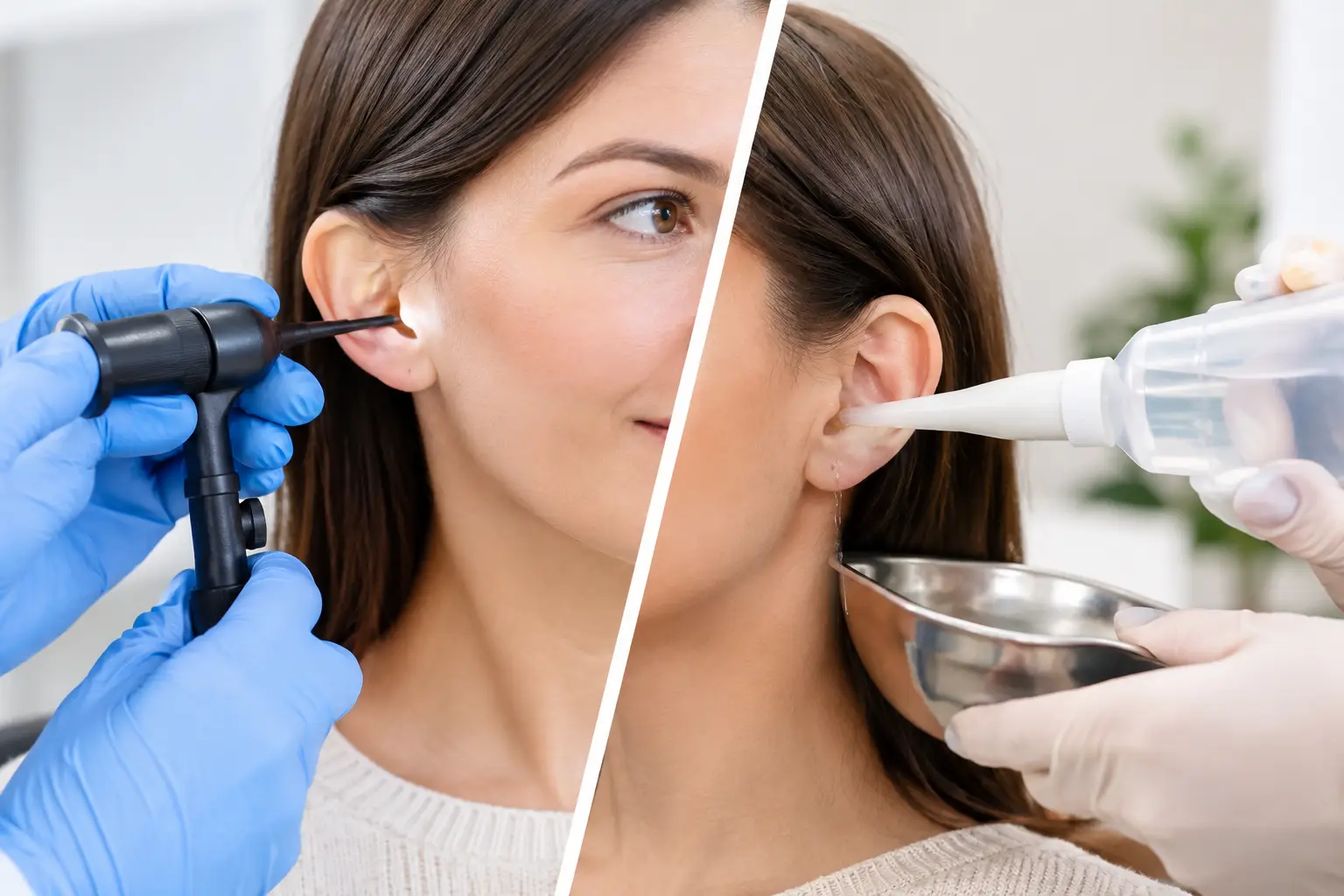
Microsuction removes earwax using a small, low-pressure suction device. A trained clinician uses magnification and direct visual guidance to look into the ear canal throughout the appointment. This matters because they can see the wax, judge how close it is to the eardrum and work carefully around the shape of your ear.
Ear syringing, sometimes called irrigation, uses a controlled flow of water to wash wax from the ear canal. It has been used for many years and can be effective in suitable cases. However, it relies more on the water dislodging the wax, rather than the clinician removing it under continuous direct view.
For this reason, microsuction is commonly chosen for people who want a dry, precise method. There is no need to introduce water into the ear, which can be particularly reassuring if you have had ear infections, surgery or a perforated eardrum in the past.
At Drub, microsuction is carried out by trained clinicians under direct visual guidance. You can also see what is happening with an in-ear camera, so the appointment feels less mysterious and more straightforward.
The key difference is control. With microsuction, the clinician can usually target the wax directly and stop as soon as the ear is clear or if the wax is too hard or close to the eardrum to remove comfortably. With syringing, water pressure and the movement of wax are less visible during the process.
Water irrigation may not be suitable if you have a known hole in the eardrum, grommets, a history of mastoid surgery, an active ear infection or significant ear pain. It can also be less appealing for people prone to swimmer’s ear, as moisture left in the canal may contribute to irritation or infection in some cases.
Microsuction is not risk-free, and a reputable clinic should never suggest otherwise. The ear canal is delicate. Suction can occasionally feel noisy, tickly or briefly uncomfortable, and some people experience temporary dizziness, especially if the ear is very sensitive. There is also a small risk of minor irritation or injury if it is carried out without appropriate training, equipment or visual control.
The practical point is simple: microsuction generally offers more precision, while syringing may be appropriate only when the ear and medical history make water irrigation a sensible option.
Do not assume that a blocked feeling always means routine wax. Before any removal method, tell the clinician if you have ear discharge, bleeding, sudden hearing loss, severe pain, fever, dizziness, recent ear surgery or a suspected eardrum perforation. These symptoms need medical assessment rather than a standard wax-removal appointment.
Syringing may also be unsuitable if you have had repeated ear infections, previously experienced problems with irrigation or have a condition that makes your ear canal narrower or more difficult to assess. Hearing-aid users and people who regularly use earplugs can develop compacted wax, which is often better dealt with through direct visual removal.
Older adults may find that wax is drier and more firmly packed. In these situations, a clinician may recommend softening drops beforehand and then remove the wax with microsuction once it is safe and comfortable to do so. Trying to force hard wax out with water or home tools is rarely the best answer.
Safe. Painless. Simple. That is the aim, but it starts with an honest assessment. A good clinician will ask about your symptoms and ear history, inspect the canal and explain whether wax is present before treatment begins.
During microsuction, you sit comfortably while the clinician uses a light and magnification to inspect the ear. The suction device may make a noticeable sound, similar to a small vacuum, but the procedure itself is usually quick. You may be asked to keep still for short periods so the clinician can work carefully.
Sometimes the wax is too dry, deep or firmly attached to remove in one visit without causing unnecessary discomfort. In that case, the right decision may be to stop, use suitable softening drops for a few days and return. That is not a failed appointment. It is careful ear care.
After successful removal, many people notice that their hearing feels clearer straight away if wax was causing the blockage. Others notice less pressure or a more natural sound in their own voice. Results vary, though, and persistent hearing changes should be checked by a GP or hearing professional.
Softening drops can be useful when used as directed, particularly before a planned professional appointment. They may help break down dry wax and make removal easier. But drops are not right for everyone, including people with a suspected perforation, ear pain, discharge or a history of certain ear procedures.
Avoid cotton buds, hair grips, ear candles and any object designed to scoop wax out yourself. Cotton buds often push wax deeper into the canal, where it becomes harder to remove. Ear candles do not remove wax safely and can cause burns or wax deposits in the ear.
If your ears feel blocked after swimming, flying or having a cold, the cause may be pressure, fluid or inflammation rather than wax. A clinician should confirm what they can see before any wax treatment is carried out.
Speed matters when a blocked ear is affecting work, family life or your confidence in conversation, but the appointment should not feel rushed. Look for a service that explains the method, checks for contraindications and uses direct visual guidance. Clear pricing and enough time to ask questions make a real difference too.
For people in Greenford, Wembley, Ealing, Alperton, Pinner, Ruislip, Harrow and nearby areas, local access can make it easier to deal with wax before it becomes more uncomfortable. Same-day appointments and home visits can be particularly helpful for busy professionals, parents, older adults and anyone with limited mobility.
Microsuction and electronic ear irrigation are both used to remove earwax. Neither method is the safest choice for everyone. The appropriate option depends on an examination of the ear, the person’s medical history, the condition of the wax and any contraindications.
Still, the best method is the one chosen after looking in your ear and listening to your history. If you have pain, discharge, sudden hearing loss or dizziness, seek medical advice promptly rather than assuming wax is the cause.
When the issue is confirmed as wax, careful treatment can be a small appointment with a big everyday benefit: clearer conversations, less pressure and one less thing competing for your attention.
If you are not sure if you have wax build up or require ear microsuction, book an appointment with us and if the ears are clear, you will receive a refund with only a £15 consultation charge deducted.