
A blocked ear can make a normal conversation sound distant, turn your own voice oddly loud and leave you feeling as though you have water trapped inside. If you are wondering how to soften stubborn earwax, the aim is not to dig it out yourself. It is to loosen the wax gently, protect the ear canal and know when it is time to let a trained clinician remove it.
Earwax is not a sign of poor hygiene. It protects the skin of the ear canal by trapping dust and debris, while helping to keep the area from becoming too dry. Problems start when wax builds up, becomes hard or is pushed deeper into the ear.
Wax naturally works its way out of the ear as you talk, chew and move your jaw. But that process can slow down. Ear canals vary in shape, and some people simply produce drier or stickier wax than others.
Hearing aids, earplugs and in-ear headphones can prevent wax from moving out naturally. Cotton buds can do the same, even when they appear to bring wax out. In practice, they often push a portion further in, where it can compact against the eardrum.
Older adults may notice drier wax, while swimmers can find that moisture causes existing wax to swell and suddenly block the ear. A build-up may also become noticeable after a cold, a flight or a change in pressure, even though the wax was already there.
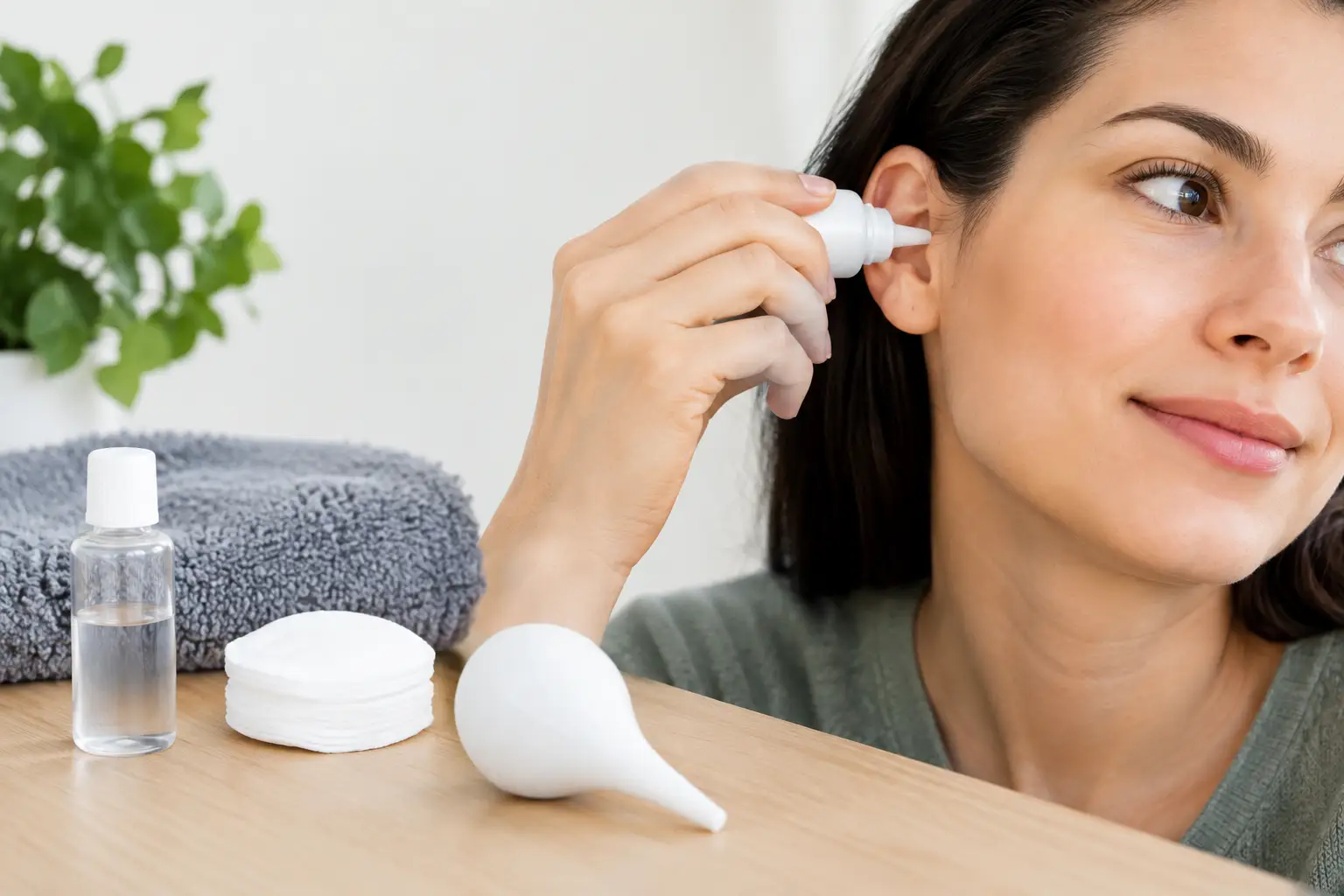
For most adults with mild to moderate wax build-up, pharmacy ear drops are the sensible first step. They work by lubricating or breaking down the hardened wax so it can move out naturally or be removed more easily during treatment.
Olive oil ear drops are a gentle option for dry, compacted wax. They do not dissolve wax instantly, but they can soften it over several days. Sodium bicarbonate ear drops may be recommended for some people where wax is particularly hard. Products containing hydrogen peroxide can also help break up wax, although they may fizz and can irritate sensitive ear canals.
The best choice depends on your ears and your history. If you are unsure, ask us at drub by calling us on 020 3916 6463 or emailing hello@thedrub.com. More is not always better as overly moisturised ears can make the procedure more complicated: use drops only as directed on the label rather than repeatedly applying them throughout the day.
Warm the bottle in your hands for a minute or two first. Cold liquid in the ear can occasionally make you feel briefly dizzy. Lie on your side with the blocked ear facing upwards, place the advised number of drops into the ear canal and stay in that position for around five to 10 minutes.
You may hear crackling, fizzing or a slight change in your hearing after using sodium bicarbonate drops. This is often the wax softening or shifting. Wipe away any excess liquid from the outer ear, but do not place tissue, a cotton bud or anything else into the canal.
We advise to use softening drops for three to five days before an earwax removal appointment. Very dry or impacted wax can take longer, sometimes up to a week. If your ear feels more blocked at first, do not panic. Wax can expand slightly as it absorbs the liquid before it loosens.
Ear drops are not suitable for every ear. Do not use them without clinical advice if you have had a perforated eardrum, grommets, ear surgery or a known hole in the eardrum. The same applies if you have ear discharge, bleeding, significant pain or a current ear infection.
Stop using drops and seek advice if they cause sharp pain, a rash, persistent dizziness or worsening symptoms. A little mild discomfort can happen with an irritated ear canal, but pain is not something to push through.
If you wear hearing aids, remove them before using drops and wait until the ear is dry before putting them back in. It can also help to have the wax checked regularly, particularly if you depend on your hearing aids for work, family life and day-to-day confidence.
When your hearing is muffled, it is tempting to try anything for quick relief. A few methods commonly make the problem worse or risk injuring the ear canal.
Avoid cotton buds, hair grips, tweezers and earwax picks. They can scratch delicate skin, cause bleeding and compact wax further down. Ear candles should also be avoided. They do not safely remove wax and can cause burns or leave candle residue in the ear.
Home ear syringing is another approach that needs caution. Water irrigation is not right for everyone, especially if you have had ear surgery, a perforation, recurrent infections or diabetes. It can also be ineffective when wax is very hard or tightly packed. If you are considering irrigation, speak to a suitable clinician first rather than trying to force water into a blocked ear.
Drops are helpful preparation, but they cannot always clear a fully blocked ear by themselves. If reduced hearing, pressure or ringing continues after a few days, the wax may need professional removal.
Microsuction is often the preferred option for stubborn wax because it is performed under direct visual guidance. A trained clinician uses magnification or an in-ear camera to see the wax clearly, then removes it carefully with a small suction device. There is no need to flush the ear with water, which can be reassuring for people who have had uncomfortable syringing in the past.
At Drub, clinicians can assess whether wax is present, explain what they can see and remove suitable build-up using microsuction. The procedure is usually quick and does not require you to wait weeks with a blocked ear. Softening drops beforehand can make removal easier, but a clinician can advise if they are unnecessary or unsuitable for you.
Earwax can cause a blocked feeling, dull hearing, mild discomfort, ringing or a feeling of pressure. However, not every blocked ear is caused by wax. An infection, fluid behind the eardrum or another ear condition can feel similar.
Seek prompt medical advice if you have severe ear pain, fever, discharge, bleeding, sudden hearing loss, spinning dizziness or facial weakness. Sudden hearing loss should not be assumed to be wax, even if you have a history of wax build-up. It needs urgent assessment.
You should also arrange a check if one ear repeatedly blocks, if you have ongoing tinnitus in one ear or if symptoms do not improve after wax has been removed. A clear ear canal is useful, but it is only one part of looking after your hearing.
Some people need earwax removal only once in a while. Others, particularly hearing-aid users or those with narrow ear canals, may benefit from a regular ear care routine. The right frequency varies. Removing wax too often when it is not causing symptoms can irritate the ear canal, while leaving recurring blockages untreated can affect hearing and comfort.
The simplest prevention is to leave the inside of your ears alone. Clean only the outer ear with a damp flannel, keep earplugs and hearing aids clean, and consider occasional softening drops if a clinician has advised they are appropriate for you. If wax tends to return, booking before it becomes fully blocked can be easier than waiting until your hearing suddenly drops.
Stubborn earwax is frustrating, but it rarely needs force. Gentle drops, a little patience and professional microsuction when needed are a safer route back to clearer, more comfortable hearing.