
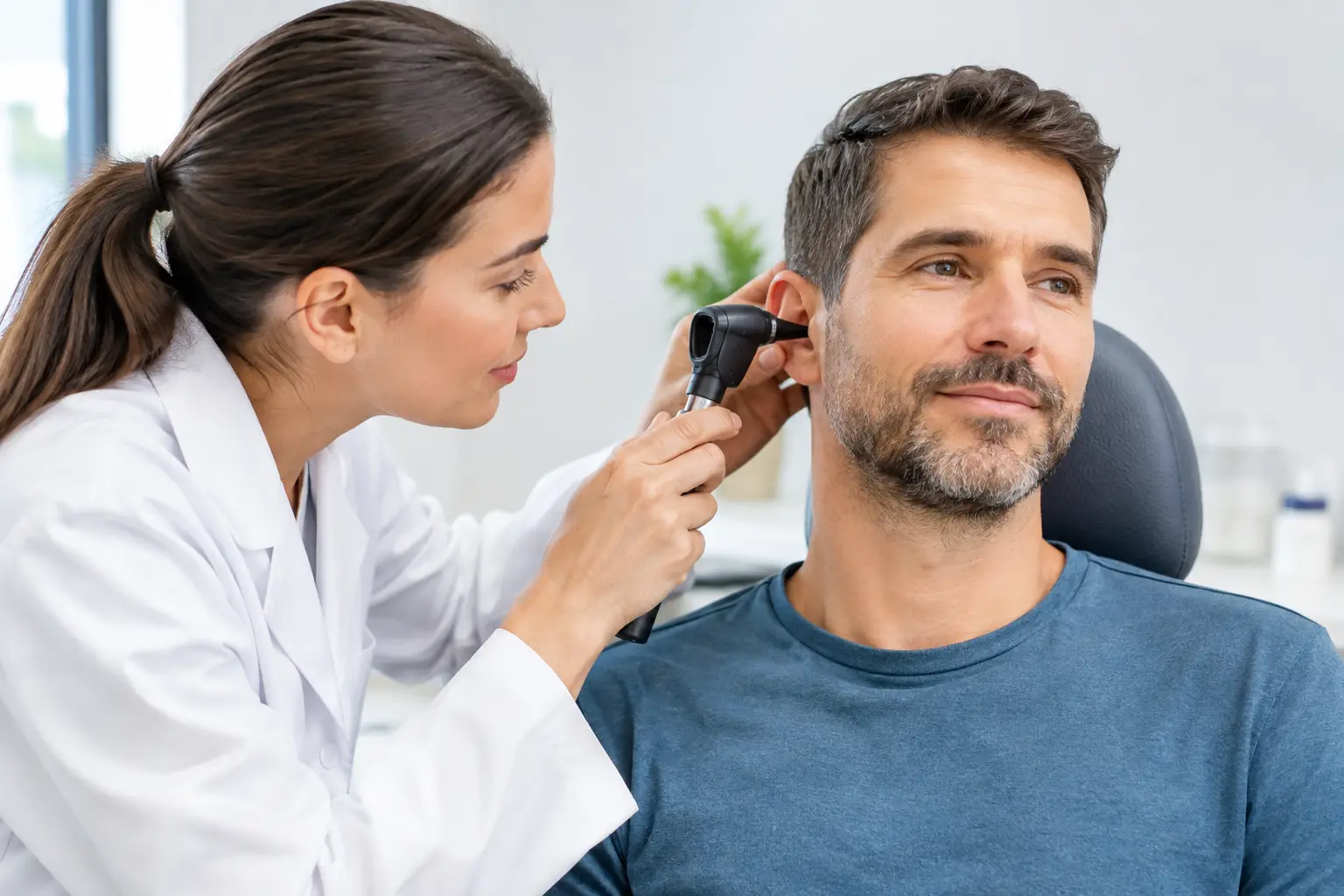
A blocked ear can make the school run, a meeting or a quiet evening at home feel strangely distant. Good earwax removal preparation can make your appointment smoother and help your clinician assess what is happening clearly from the start. Most people need very little preparation – and the most useful thing is often knowing what not to do.
Microsuction is a controlled method of removing suitable earwax under direct visual guidance. Rather than flushing the ear with water, a trained clinician uses a small suction device while looking into the ear canal. It is quick for many people, but every ear is different. The amount, position and consistency of wax all affect what can be done on the day.
Before reaching for drops, ask yourself whether this is likely to be straightforward wax build-up. Common signs include a blocked or full feeling, muffled hearing, pressure, hearing-aid feedback, or symptoms that seem worse after swimming or showering. Some people also notice ringing, although ringing can have a number of causes.
Wax is normal. It protects the ear canal and usually works its way out on its own. The problem begins when it builds up, becomes compacted or sits in a way that affects hearing and comfort. Hearing-aid users, people with narrow ear canals, frequent earbud users and regular swimmers can be more prone to recurring build-up.
However, not every blocked ear is caused by wax. If you have significant ear pain, discharge, bleeding, sudden hearing loss, dizziness, facial weakness, a high temperature, or symptoms following a head injury, seek urgent medical advice rather than booking routine wax removal. These symptoms need a proper medical assessment.
It is also sensible to tell the clinician before your appointment at drub if you have had ear surgery, a known perforated eardrum, grommets, recurring ear infections or severe pain when using ear drops. That information helps them choose the safest next step.
For dry, hard or tightly packed wax, softening drops can be helpful. They may make wax easier to remove and can reduce the chance that you need a second appointment. Olive-oil-based drops are commonly used for this purpose, but the right approach depends on your ear history and the advice you have been given.
If you have been advised to soften wax, use the drops exactly as directed on the label or by your clinician. Many people use them for a few days before an appointment, but more is not always better. Overusing drops can leave the ear canal very wet, which may make removal less straightforward in some cases.
Do not use drops simply because an ear feels blocked if you know or suspect you have a perforation, grommets, an active ear infection, or recent ear surgery, unless a qualified professional has specifically advised you to do so. The same applies if drops cause sharp pain, marked burning or a rash – stop using them and ask for advice.
A little crackling, a temporary fuller sensation or the feeling of liquid in the ear can happen after drops. This does not necessarily mean anything is wrong. Keep the bottle at room temperature, follow the instructions, and avoid putting anything into the ear afterwards to try to “help” the drops work.
The temptation to fix a blocked ear yourself is understandable, particularly when you need to hear clearly for work or family life. Yet home attempts are a common reason wax gets pushed deeper.
Avoid cotton buds, hair grips, rolled tissue and any ear-cleaning tool inserted into the canal. They can compact wax against the eardrum, scratch delicate skin and make a simple issue harder to treat. The ear canal is not designed to be scrubbed clean.
Ear candles should also be avoided. They do not remove earwax safely and carry a risk of burns and wax residue. Home irrigation kits are not right for everyone either, especially if there is a history of perforation, surgery, infection or ear pain. If you are unsure, pause and ask a clinician rather than taking a chance.
You do not need to stop washing your hair or showering before microsuction. Just avoid deliberately directing water into the affected ear. If you use hearing aids, keep them clean and dry as usual, but bring them with you if you would like to check the fit and sound afterwards.
Arrive as you are. There is no need to fast, take pain relief in advance or arrange a day off after a routine appointment. Wear whatever feels comfortable, and bring any relevant information about previous ear treatment, surgery or medication if you have it.
If possible, make a note of when the blockage began and whether the symptoms affect one ear or both. Mention if you have tried drops, recently flown, had a cold, been swimming, or have had a similar problem before. These details can help distinguish wax from pressure-related or infection-related symptoms.
Parents bringing a child should explain the appointment simply: someone will look in their ear and, if wax is suitable for removal, use a small instrument to take it away. Calm reassurance helps. Whether treatment is appropriate for a child depends on their age, symptoms and ability to stay still, so it is worth discussing this when booking.
If you are nervous, say so at the beginning. Many first-time patients worry that microsuction will hurt or that the sound will be unpleasant. You may hear a low suction noise and feel gentle changes in pressure, but the clinician can talk you through each stage and pause if you need a break. Feeling informed tends to make the experience much easier.
Your clinician will first examine the ear with a lighted magnified device or camera. This matters because wax removal should only go ahead when it is appropriate to do so. In some cases, there may be little wax, the wax may need more softening, or the ear may need medical review instead.
If microsuction is suitable, the clinician removes wax carefully while maintaining a clear view of the ear canal. You will normally stay seated throughout. Treatment can be very quick when wax is loose and accessible, while dry or impacted wax may take longer. Sometimes a follow-up appointment is the safer choice rather than trying to remove every last piece in one sitting.
At Drub, patients can see the process through an in-ear camera, which can be particularly reassuring if you have spent days wondering why your hearing has changed. Clear explanations are part of good care: you should know what has been found, what was removed and what to do next.
Following wax removal, hearing can feel immediately clearer if wax was the cause of the blockage. The ear may also feel unusually open for a short while – especially if you had become used to reduced sound. Mild sensitivity can happen, but ongoing pain, discharge, bleeding, worsening dizziness or a sudden change in hearing should be checked promptly.
Try not to put buds or tools into your ears after treatment. If your clinician recommends a spray or drops for dryness or future wax management, use them as directed. For people who repeatedly develop troublesome wax, a planned maintenance routine can be more comfortable than waiting until hearing is heavily affected.
The right timing varies. A hearing-aid wearer may benefit from more regular checks than someone who only gets a blockage every few years. There is no prize for cleaning ears often, and no need to remove normal wax that is causing no trouble.
Most people can return to normal activities straight afterwards, including driving, if they feel well. If you experience dizziness or feel unsteady, wait until you feel fully settled and seek advice if it persists.
Sometimes the sensation is not caused by wax, or there may be swelling, fluid or another issue that needs assessment. Let the clinician know before you leave if the feeling has not improved, and follow their advice on the next step.
Usually, yes, but tell the clinician what you used and when. Avoid adding extra products at the last minute unless you have been advised to do so.
A clear, comfortable ear often begins with a simple decision: leave the canal alone, share your history honestly and let a trained clinician at drub assess it properly. That is the calmest route back to hearing the moments that matter.
Book your appointment now at drub Ear Care & Wellness to pay us a same day visit.