
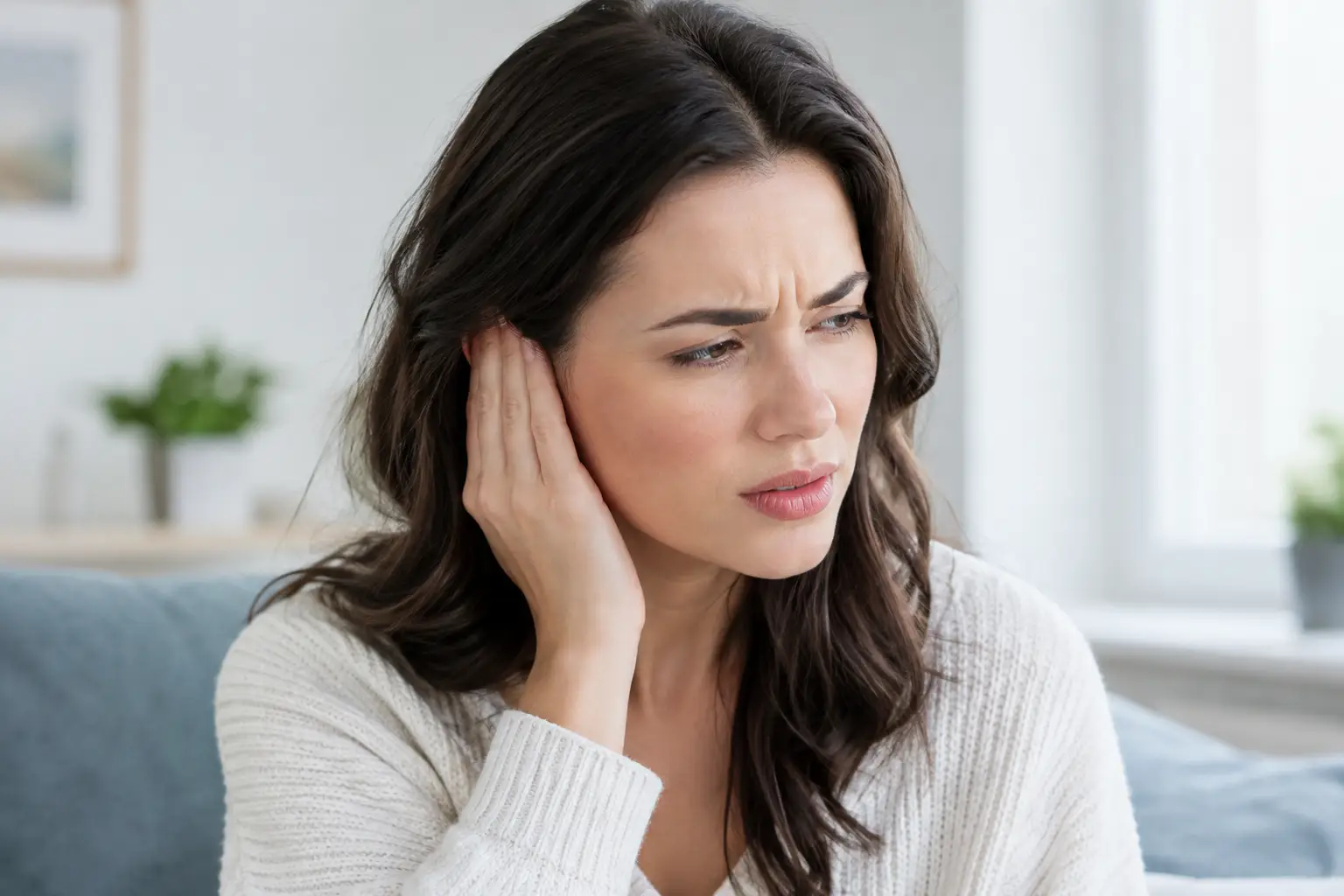
A meeting sounds muffled. Your own voice feels strangely loud. Or you step out of the shower and one ear suddenly feels as though it has been filled with cotton wool. Blocked ears are common, but the cause is not always the same – and the right next step depends on what is behind that closed-up feeling.
For many people, the problem is compacted earwax and can be dealt with quickly. For others, it may be linked to a cold, sinus pressure, an ear infection or a change in air pressure. Knowing the difference helps you avoid making discomfort worse with a cotton bud or an unsuitable home remedy.
People describe blocked ears in different ways. You may notice reduced or dull hearing, pressure, popping, a feeling of fullness, mild discomfort, ringing, or the sense that sounds are echoing inside your head. If wax is the cause, the change can build slowly over days or weeks. It can also seem sudden after swimming or showering, when water sits around existing wax and causes it to swell.
One blocked ear is common, but both ears can be affected, particularly if you naturally produce more wax or wear hearing aids, earbuds or earplugs regularly. The experience can be frustrating rather than painful, yet it still affects everyday life. Conversations become harder to follow, television volume creeps up and phone calls can feel tiring.
Earwax is not dirt. It is a protective substance that traps dust and helps keep the ear canal healthy. Normally, small movements of the jaw help it move out naturally. Sometimes that process slows down, or wax becomes dry and compacted.
This is more likely if you use hearing aids or in-ear headphones, have narrow ear canals, produce naturally drier wax, or repeatedly put cotton buds into your ears. Cotton buds often push wax further in, creating the very blockage people are trying to remove.
Wax-related blockage often comes with muffled hearing and a full sensation, without severe pain or feeling unwell. A clinician can check the ear canal and confirm whether wax is actually present before recommending removal.
The ears connect to the back of the nose through narrow tubes called Eustachian tubes. When you have a cold, hay fever, sinus congestion or irritation in this area, these tubes may not equalise pressure as easily. That can leave your ears popping, crackling or feeling pressurised.
Flying, driving in hilly areas and diving can produce a similar effect. Gentle swallowing, yawning or chewing may help during pressure changes. If you are congested, the blocked sensation can take a little time to settle as the cold or allergy improves. This is different from a wax blockage, so earwax removal will not necessarily solve it.
After swimming or washing your hair, water can sit in the ear canal and create an immediate blocked feeling. Tilting your head to the side and gently pulling the outer ear can sometimes help it drain. Do not insert a bud, tissue or hair grip to try to soak it up.
If the ear becomes painful, itchy, swollen or starts to discharge after swimming, seek advice. These symptoms can point to irritation or an outer-ear infection rather than simple trapped water.
Ear infections, a perforated eardrum and less common hearing conditions can also cause fullness or reduced hearing. That is why it is sensible not to assume every blocked ear is wax, especially when there is pain, discharge or a sudden change in hearing.
If you think earwax is the likely cause and you have no pain, discharge, ear surgery history or known eardrum perforation, wax-softening drops may help. Use them as directed and give them time to work. They soften wax; they do not always remove a firm blockage on their own.
Avoid ear candles. They do not remove wax safely and can cause burns or leave debris in the ear. Avoid cotton buds too. They may feel satisfying for a moment, but they commonly compact wax deeper into the canal.
It is also worth being cautious with home irrigation kits. They are not suitable for everyone, particularly if you have had ear surgery, grommets, a perforated eardrum, recurring ear infections, pain or discharge. Forceful flushing can be uncomfortable and may cause problems when the diagnosis is wrong.
For pressure linked to a cold or a flight, swallowing, sipping water or chewing gum can be enough. Gentle pressure-equalising techniques may be useful for some people, but never blow forcefully. If pain develops or the blockage persists, get assessed rather than repeatedly trying to pop the ear.
Professional assessment is a sensible choice when reduced hearing is affecting your work, driving confidence, family conversations or sleep. It is particularly useful if drops have not helped, the ear has felt blocked for more than a few days, or you cannot tell whether wax is the cause.
Microsuction is a controlled method of removing earwax under direct visual guidance. A trained clinician uses magnification or an in-ear camera to see the ear canal, then removes suitable wax with gentle suction. Unlike traditional syringing, it does not rely on pushing water into the ear.
The appointment should begin with a look inside the ear. That matters. If there is no wax, or if the ear appears irritated or infected, the clinician can explain the appropriate next step rather than carrying out an unnecessary procedure. Many people find microsuction quick and comfortable, although removal can be more involved when wax is very hard or deeply compacted.
At Drub, experienced technicians explain what they can see throughout the process, so you are not left guessing why your ear feels blocked or what is being done to help. With more than 100+ 5 star google reviews, the service offered is exceptional. Start by booking your appointment at www.thedrub.com or calling 020 3916 6463.
Do not book routine wax removal as the first step if you have warning signs that could suggest something more urgent. Seek prompt medical advice if you have:
Sudden hearing loss should be assessed urgently, even if it feels like a simple blockage. The same applies if symptoms began after a head injury, or if you have a weakened immune system and develop ear pain or discharge.
Once wax has been removed, hearing can feel surprisingly sharp for a day or two. That does not mean the ears need frequent cleaning. In most cases, the best maintenance is to leave the ear canal alone and allow its natural self-cleaning process to continue.
If you are prone to repeat build-up, a clinician may suggest a sensible maintenance routine based on your ears, hearing aids, swimming habits and the type of wax you produce. There is no one schedule that suits everyone. Some people need occasional checks, while others go years without a problem.
Blocked ears are uncomfortable, but they are usually manageable when the cause is identified properly. If the sound of life has become dull, choose a careful assessment over poking, flushing or hoping the problem will disappear on its own.