
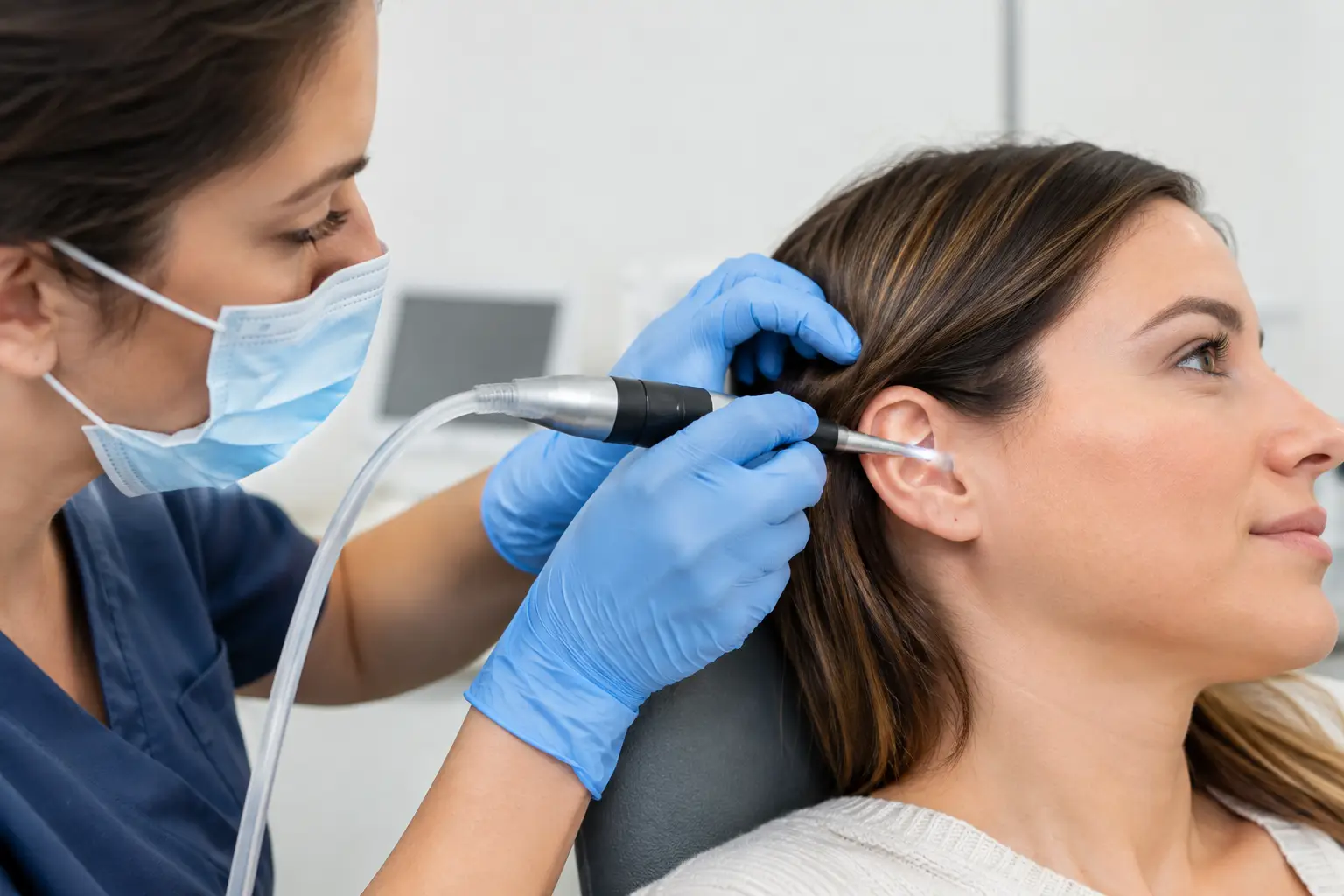
A blocked ear can make everyday conversations feel oddly distant. You may turn up the television, hear your own voice booming, or feel pressure after swimming, travelling or wearing hearing aids. So, how does ear microsuction work? It uses gentle suction to remove earwax while a trained clinician looks directly into the ear canal, rather than flushing the ear with water.
For many people, that direct view is the reassuring part. The clinician can see where the wax is, work carefully around the ear canal and stop once the blockage has been cleared. Microsuction is generally quick and well tolerated when performed by an appropriately trained professional, although suitability and individual experience can vary.
Ear microsuction is a controlled earwax-removal method. At your appointment, a clinician first asks about your symptoms and ear history. This matters because a feeling of blockage is not always caused by wax. Ear infection, inflammation, a foreign object or changes in pressure can cause similar symptoms and need a different approach.
If wax removal is appropriate, the clinician examines the ear canal using magnification and a light, often with an in-ear camera. They then place a slim suction tube just inside the ear canal. The tube is attached to a medical suction device fitted with a fine suction probe.
The key difference is visual guidance. With traditional syringing or irrigation, water is used to flush wax out and the clinician cannot see every stage of removal in the same way. During microsuction, the clinician can watch the wax as it is removed and adjust their technique as needed.
You will usually sit upright throughout. Most appointments are quick, although the time depends on how much wax is present, how dry or compacted it is, and whether one or both ears need treatment. Some wax comes away easily. Hard wax that has been building up for months may need a little more patience, or softening drops before treatment.
Most people find microsuction comfortable rather than painful. You may hear a whirring or suction sound, which can seem louder than expected because it is happening inside the ear canal. Some people notice a light pulling sensation as the wax moves.
If the wax is pressed tightly against the eardrum, or the ear canal is particularly sensitive, the procedure may feel briefly uncomfortable. A good clinician will explain what is happening, work steadily and ask you to say if you need a pause. You should not feel you have to push through pain.
Many people notice a change as soon as the wax is removed: sounds may become clearer, the blocked sensation can ease, and their own voice may sound more natural again. Results vary, though. If hearing remains reduced after the ear is clear, there may be another cause worth discussing with a GP, audiologist or ear specialist.
Ear canals are narrow, curved and different from person to person. Wax can sit near the entrance, deeper in the canal, or around hearing-aid domes and other debris. Looking directly into the ear helps a clinician decide whether removal is needed and choose the safest way to do it.
Direct visualisation also means the clinician can identify situations where microsuction should be delayed or avoided. For example, an ear that is very sore, actively discharging, recently operated on or affected by a suspected eardrum perforation needs careful assessment. The right next step may be medical review rather than routine wax removal.
This is why DIY tools are a poor substitute. Cotton buds often push wax further in, and ear candles are not an effective wax-removal method. Small scoops and camera kits sold for home use can scratch the ear canal or injure the eardrum if used without the right skill and view.
Ear syringing is a term many people still use for water-based wax removal. Modern irrigation devices are more controlled than older syringes, but they still rely on flushing the ear with water. Microsuction uses no water and removes wax under direct visual guidance.
That can make microsuction a preferred option for people who dislike the sensation of water in their ears, need a quick appointment, wear hearing aids or have previously found irrigation uncomfortable. It may also be suitable where water-based removal is not advised, although suitability always depends on your individual ear history.
Neither method should be treated as a one-size-fits-all fix. The safest option is the one chosen after someone has looked in your ears and asked the right questions.
It depends on the wax. Softening drops can make dry, hard or compacted wax easier to remove, especially if it has been there for a long time. Olive-oil-based drops are commonly used for this purpose, but use them only as directed and tell the clinician what you have used.
Whether you should use ear drops beforehand depends on the type and condition of the wax. Some people benefit from softening ear drops, while others may not need them. Follow the clinic’s instructions and disclose any perforated eardrum, grommets, active infection or previous ear surgery before using drops.
Earwax is normal and protective. It traps dust and debris, lubricates the ear canal and usually works its way out naturally. Problems arise when wax builds up faster than the ear can clear it.
This is more common in people who wear hearing aids or earbuds regularly, swimmers, people with narrow or hairy ear canals, and anyone who has had repeated wax blockages before. As we get older, wax can also become drier and harder. Trying to clean deep inside the ear with cotton buds can make the issue worse by compacting wax against the eardrum.
Signs that wax may be involved include a blocked or full feeling, gradual reduction in hearing, ringing, mild discomfort, itching or hearing-aid feedback. These symptoms are not proof of wax, which is why an ear examination comes first.
Contact your GP urgently or NHS 111 rather than booking routine wax removal if you experience sudden hearing loss, severe ear pain, bleeding, pus-like discharge, significant dizziness, facial weakness, fever or an injury to the ear. Sudden hearing loss, particularly in one ear, should not be assumed to be wax.
You should also mention any past eardrum perforation, ear surgery, grommets, recurring infections or use of blood-thinning medicines before an appointment. Clear information helps the clinician keep treatment appropriate.
Once the wax is gone, there is usually very little aftercare. Avoid putting cotton buds or other objects into the canal. If you are prone to recurring build-up, a clinician may suggest a simple maintenance routine, such as occasional drops, based on your ears rather than a fixed schedule.
At Drub, the focus is on making that process feel straightforward: explain what can be seen, remove wax carefully where appropriate, and make sure you know what to do next. If your ears still feel blocked after removal, do not simply keep treating them as wax – get them checked.
Clearer hearing can be a small change with a big effect, whether it is catching a colleague’s words the first time, enjoying family conversation or stepping outside without that muffled pressure. The sensible next move is an ear check that gives you a clear answer, not a guess.